
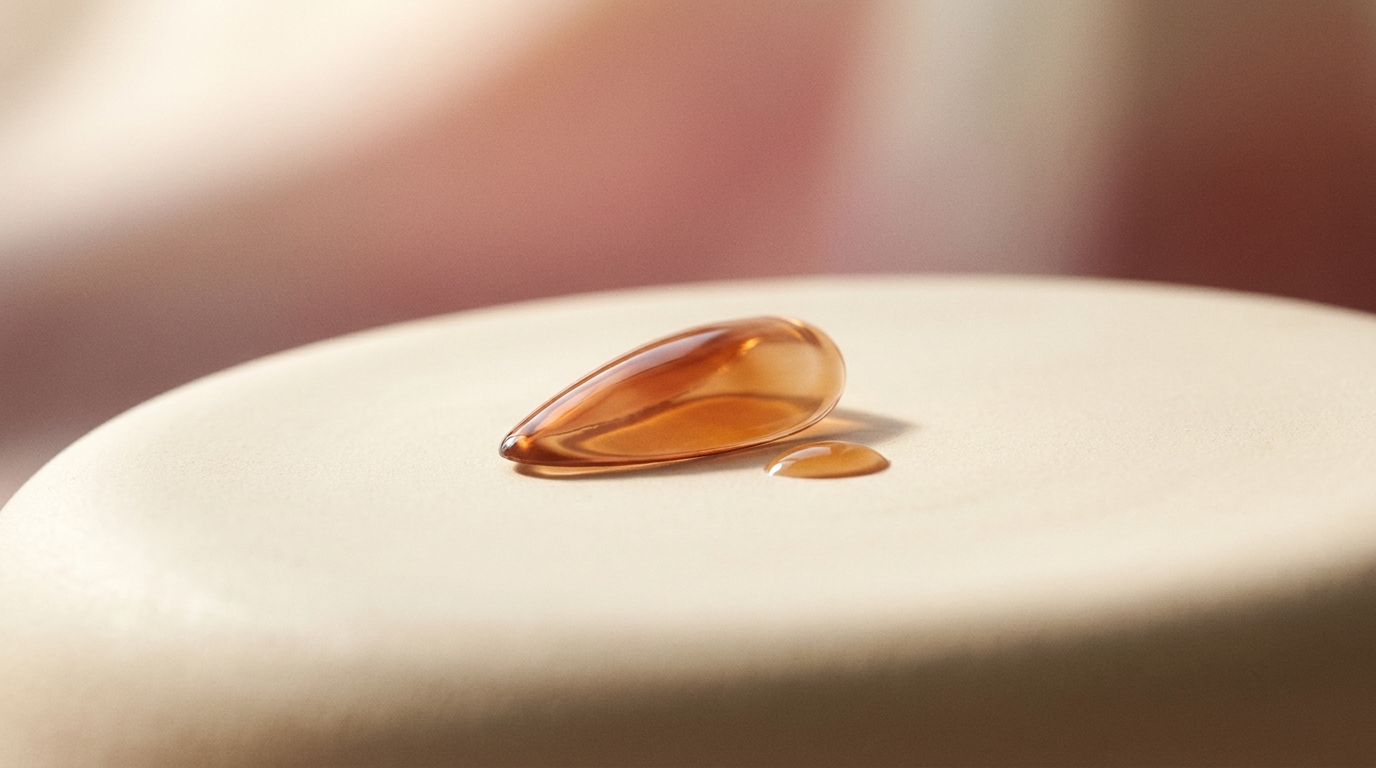
Rubber gel keeps appearing on nail salon menus around Cape Coral and Fort Myers, usually without any explanation of what it actually is. If you've seen it listed next to liquid gel, polygel and dip, and quietly nodded along, this is for you. Here's what rubber gel really does, how it behaves on your hands, and whether it's the right call for your next appointment.
So what is rubber gel, really?
Rubber gel is a type of hard gel with a flexible, slightly cushioned finish. Think of it as a middle layer between the hardness of acrylic and the softness of regular gel polish.
It cures under a UV or LED lamp like any gel, but once set, it has a bit of give. That tiny amount of flex is the whole point. Rubber gel is designed to move with your natural nail instead of against it.
At The House of Nails, rubber gel is offered as a reconstruction service for fragile natural nails, priced from $50 for about a 90-minute appointment (checked October 2026). It's not an extension system in the traditional sense. It's a protective overlay with a reinforcing effect.
Who it's actually for
Rubber gel is not for everyone, and that's a good thing. It solves a very specific problem.
Consider asking about rubber gel if:
- Your natural nails bend, peel or split before they get any length
- You've worn acrylic or hard gel for a long time and your nail plates feel thin
- You want some strength without a dramatic extension
- You're trying to grow your own nails out and need a bridge
- Regular gel polish keeps lifting at the edges within a week
It's less useful if you want long, dramatic shapes or if your natural nails are already strong and simply want colour. In those cases, your technician will probably steer you toward a different system.
How it behaves in Florida
Here's the part no national blog will tell you. Southwest Florida is tough on enhancements. Heat, humidity, chlorine, salt water and sunscreen all work against the bond between product and nail.
Rubber gel generally holds up well in this environment because the flexibility reduces one of the biggest culprits of lifting: tiny impacts. Every time a rigid enhancement takes a knock, a small gap can open at the edge. A more flexible product absorbs that same knock without compromising the seal as easily.
In practice, rubber gel wears for roughly 3 to 4 weeks, depending on how you use your hands. Pool days, boat days and heavy cleaning will shorten that. A desk job and gloves for washing up will extend it.
That timeframe is the salon's own guidance, and it's conditional for a reason. Nobody can promise an exact number of weeks on a product that lives on your hands.
Rubber gel vs. the other things on the menu
This is where most people get stuck. The menu lists rubber gel, liquid gel, polygel, dip powder, acrylic. They look interchangeable. They're not.
Rubber gel
Flexible, protective, best for fragile natural nails. Reinforces what you already have.
Liquid gel
Also a reconstruction option for weakened nails, slightly firmer finish. Also from $50 for a fill, 90 minutes.
Polygel
Hybrid of acrylic and gel. Lightweight, sculptable, good for building length. From $60.
Acrylic
The classic hard system. Strongest option, best for dramatic length and shape. Full sets from $60 for short.
Dip powder
Odour-free, cures without a lamp, colour-driven. From $50. Not a reconstruction system.
If your main question is how do I protect my nails, rubber gel or liquid gel are the conversation. If your main question is how do I get long nails, acrylic and polygel are the conversation.
What to say at the desk
You don't need to memorise this guide. One or two honest sentences will get you a better result than any technical vocabulary.
Try something like:
- "My natural nails are thin and keep peeling. What would you suggest?"
- "I don't want length. I just want them to stop breaking."
- "I've worn acrylic for years and I want to give my nails a break without going bare."
Your technician will look at your nails and recommend a system. If rubber gel comes up, you'll now know exactly what they mean, and you can ask the right follow-up: how often you'll need a fill (every 2 to 3 weeks for the gel systems), whether you can wear colour on top, and what to avoid in the first 24 hours.
A few honest caveats
Rubber gel is a tool, not a miracle. If your nails are splitting because of an underlying health issue, no product will fix the cause. Persistent nail changes are worth a conversation with your doctor, not just your nail technician.
Removal matters too. Any hard gel system needs to be filed down and soaked off properly. Picking it off takes layers of your natural nail with it, and you'll end up right back where you started.
Ready to see if it suits your hands?
If any of this sounded like your situation, the next step is simple: come in, show us your nails, and we'll talk you through what we'd recommend. No pressure, no upsell on something you don't need.
Book your appointment at thehouseofnails.net/services, or call us at (239) 347-3947. We're open seven days a week, with evening hours until 9 PM Monday through Friday.
Prices and service durations in this article were checked October 2026 against the salon's live service menu. Prices can change — confirm at booking.
¿Lista para tu próxima manicura?
Reserva con nuestro equipo y sal con unas uñas que te encanten.
Reservar