
How to Dry Your Hands Right After a Day on the Gulf
You just got back from Fort Myers Beach or an afternoon on the boat. Your hands are warm, a little salty, and your fresh set looks fine for now. What you do in the next thirty minutes decides whether it still looks fine next weekend.
Salt water, sand, sunscreen residue, and the sun itself all pull at the edges of a manicure. Most people rinse their hands, towel off, and move on. That is exactly when lifting starts. Here is the post-beach routine that keeps a set intact.
Step 1: Rinse before you towel
Sand is the real enemy. A single grain stuck under the free edge of a gel or dip nail acts like sandpaper every time you grip something. Before you reach for a towel, rinse your hands in cool fresh water for a full minute.
- Hold your hands palm-down and let water run over the top of the nails, not just the palms.
- Gently rub each fingertip against the opposite thumb to lift grains out from under the free edge.
- Avoid hot water — it opens the layer between enhancement and natural nail.
Step 2: Wash with the mildest soap you own
Beach showers and marina sinks usually have harsh antibacterial soap. That is fine for your skin, but the sulphates in it will dull a top coat and dry out the skin around your nails until it starts to peel. Peeling skin pulls on the sidewalls of a manicure, which is where lifting almost always begins.
Use a fragrance-free, sulphate-free hand soap if you can. If you can't, keep the wash short — fifteen seconds, not a scrub.
Step 3: Pat dry, don't rub
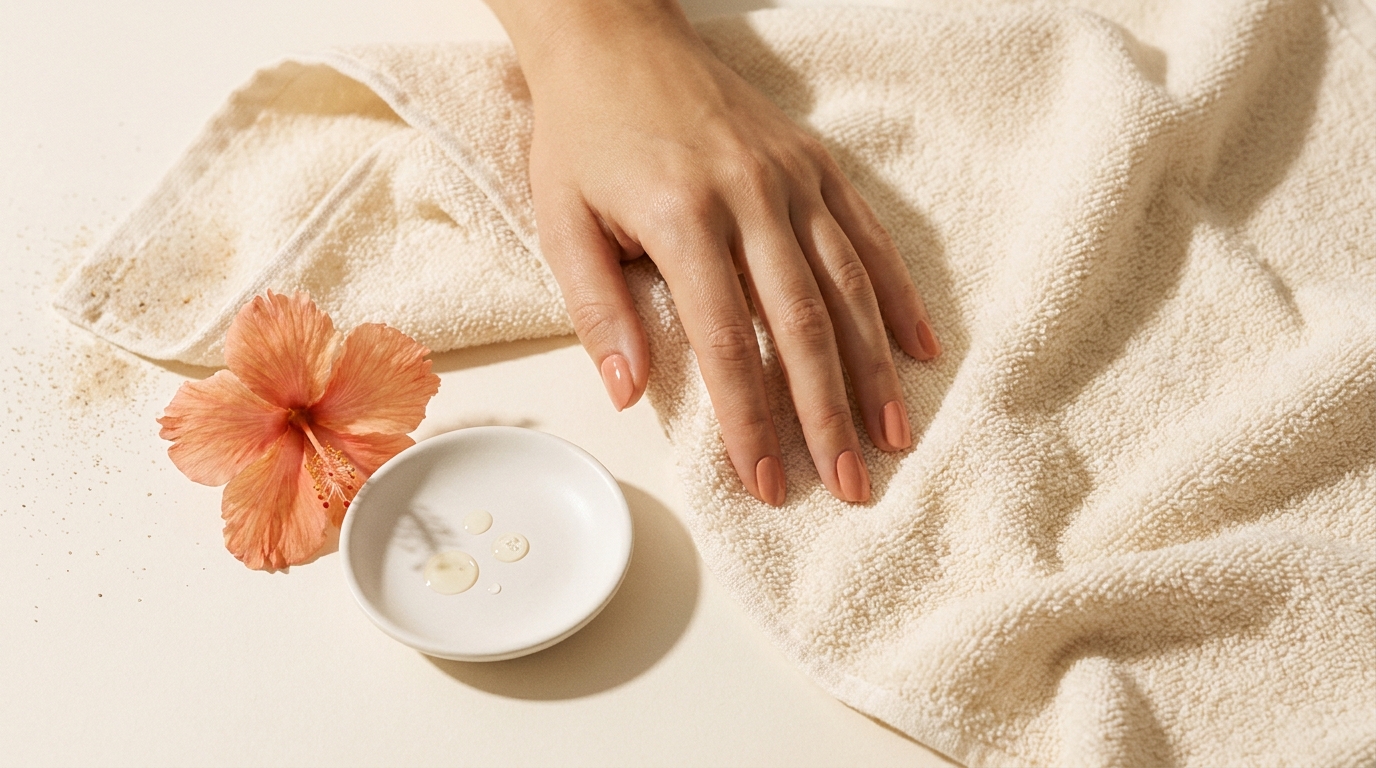
Rubbing a towel back and forth over a wet set is one of the fastest ways to catch the free edge and start a lift. Place a soft towel flat on the counter and press your hands onto it, palm up then palm down. Then let your hands air-dry the rest of the way for a minute or two.
If you only remember one thing from this article: patting is for your nails, rubbing is for your hair.
Step 4: Check every nail before you oil
Before you reach for cuticle oil, take ten seconds to look at each nail from the side. You are checking for three things:
- A tiny gap at the sidewall or free edge (early lifting).
- A hairline crack across the surface.
- Any raised corner, especially on the thumb or index.
If you spot one, do not pick at it. Do not peel. Keep the nail dry for the rest of the evening and call the salon the next morning. Nail repair at The House of Nails is $5 when caught early — and much less damaging than waiting until half the nail lifts off.
Step 5: Oil the cuticle, not the nail plate
Cuticle oil is the single most underused product in nail care. After a beach day, your skin has lost moisture and your cuticles are tight. A drop of oil at the base of each nail, massaged in for ten seconds, keeps the skin flexible and stops it from pulling at the sidewall of your set.
Any plant-based oil works — jojoba, almond, or a dedicated cuticle oil. Apply it once that evening and again before bed. Reapply every day for the next two or three days until your skin feels normal again.
Step 6: Sunscreen your hands tomorrow morning
Here is the one most people miss. The UV from one beach day doesn't just tan your hands — it also fades gel polish, especially bright corals and reds, and can leave acrylic looking slightly yellow at the sidewalls. For the next few days, put sunscreen on the backs of your hands whenever you leave the house. Not on the nail itself (it can interact with top coat), but on the skin around and above it.
What to say at your next appointment
If you spend a lot of time on the water or at the beach, tell your technician before they start. There are small adjustments she can make — a thicker application at the sidewall, an extra layer of top coat, a shorter length that is less prone to catching — that make a real difference in Southwest Florida conditions. A set built for office life is not the same as a set built for a Cape Coral weekend.
Snowbirds especially: the set that lasted four weeks up north will not behave the same way here. That is not your technician's fault and it is not a bad product — it is Florida. Shorter cycles, a more protective finish, and this aftercare routine are what close the gap.
Keep your set honest about what you do with your hands
A manicure in this market is a two-way deal. The salon gives you the best application it can, and you give it a fighting chance between visits. Thirty minutes of care after a Gulf day is the difference between a set that looks tired at week two and one that still looks fresh at week three.
If you'd like help building a routine around how you actually spend your time — pool, boat, beach, garden, or all four — book a Classique Manicure and mention it when you arrive. We'll match the service to your life, not the other way round.
Sources and verification
- Service names, durations, and starting prices referenced from thehouseofnails.net, verified 2026-09-23. Prices quoted as "from" because live values drift.
- Nail repair pricing ($5) from the salon's published add-on list, verified 2026-09-23.
- No medical claims are made in this article. If you notice redness, pain, swelling, or discolouration of the nail or surrounding skin, see a doctor or podiatrist.